
I just completed my Oscar odyssey hours before the ceremony with Killers of the Flower Moon. Is that the way I wanted it? Well, here’s my overview of this year’s big films.
 American Fiction
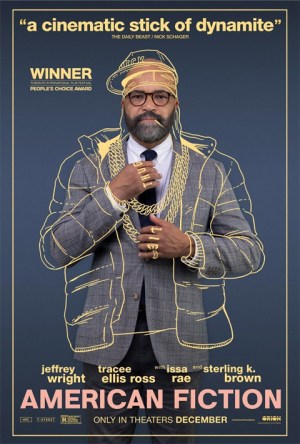
This year’s Sneaking Oscar Ninja and its late release (in the UK, at least) makes its acceleration this month all the more exquisite. But for all the steam it’s picked up, it’s only likely to trouble the adapted screenplay category (hopefully) and, at a push, with a lot of luck, cause a big upset in the acting categories. American Fiction should have more sway in this year’s Oscars: It’s brilliantly directed by Cord Jefferson, with visual jokes hitting the satire home just as much as the sharp script (superb pace and deft narrative add a lot to that).
Jeffery Wright’s star continues to soar, and this film wouldn’t be the same without his pitch-perfect Thelonius ‘Monk’. But then, almost every role in American Fiction pitch perfect. The lines drawn between his family make one of the best-realised b-plots in this selection, particularly with siblings (Tracee Ellis Ross, his brilliant sister, not least as a quick foil to establish the framework for the themes, and Sterling K. Brown, just brilliant). For me, it loses a bit of sheen in its third-act as the meta film adaptation dilutes the superly realised concept – the academic black writer who tries to parody the publishing industry’s treatment of African-American writing only to succeed at every point. But its commitment to its ambiguity lands it in my top three.
 Anatomy of a Fall
Another slow, ambiguous character study, hinging on superb performance from Best Actress nominee Sandra Hüller (and not her only brilliant film in this selection). Anatomy of a Fall has a curious structure, and like American Fiction, although in an utterly different way, utterly dedicated to the importance of ambiguity (choirs sing). There’s something about Anatomy of a Fall that’s timeless – interesting, considering the weight of nominated films that are period pieces.
It recalls 1970s crime dramas and thrillers, with a hint of Kubrick via The Shining at moments. It hinges on, and rejects the relevance of modern technology, or its ability to capture or bring insight into its subject matter? Can, then a film do that?Well, its ambiguity can confound or frustrate, but that’s the point: a remarkable study of the impossibilities of a relationship, best put by the central character on the stand.
 Barbie
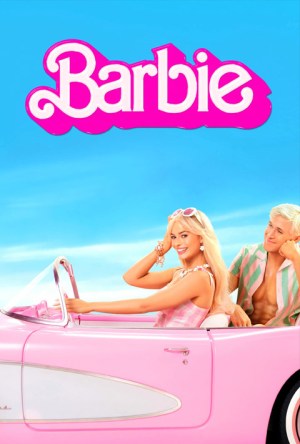
The big film of 2023, and no one can take that away. If anything has overshadowed this year’s ceremony, it’s the awkwardness that director Greta Gerwig and actress Margot Robbie were snubbed while painfully, Ryan Gosling’s Ken got a nod. It’s not a helpful discussion for a film with an importance that may take decades and many Kens to unpack.
Barbie is a sheer cinematic event, even without being portmanteaued with Oppenheimer. But that’s not to understate the filmmaking – this is a cinematic beast that skillfully challenges concepts, ideas, and what a blockbuster film can do. It’s hard to know how to respond to it, or see where its legacy will lead. But failing to spark much at the Academy Awards apart from a show-stopping number and some pointed jokes seems inevitable.
 The Holdovers
One of three films on this list that elicited a hearty chuckle. It hinges on its three characters. It’s an easy, sharply structured film that has rightly lifted the profile of its three leads. There’s more to it than the conceit – being stuck at boarding school over the holidays. But the central idea, of truth and morals is phenomenally relevant to the times. That makes it a real shame that it’s stalled its run to the Oscars.
Not likely to be a regular Christmas watch, but future films with all three of those main characters may well be.
 Killers of the Flower Moon
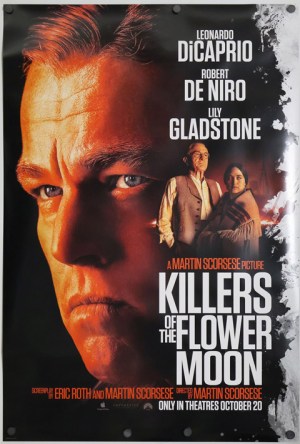
A Scorsese movie is an event. Like much of his latter work, Flower Moon is a consummately made, slightly too long story that takes its time to sift through its characters.
Huge respect for the experimental ending, landing its point, and using Scorsese’s not-universally-liked cameo as a signature. It’s an odd sign-off – there will be more from the great director, despite his gloomy recent coverage (he promises a punchy follow-up). I was lucky to catch him in conversation on Southbank last year, and his passion and articulate commentary on cinema is undimmed.
But what about the film? Well, it corrects a wrong, shining a light on a conspiracy that left a deep stain on 20th century America, with two of the greatest American actors at its core (and Lily Gladstone’s magnetic central metronome). It’s beautifully constructed, but is seldom better than the extended middle when the thumping percussive beat traps all its characters into their roles. Its star has faded since its launch, working against Apple’s ambitions in much the same way The Irishman did in for Netflix. This could be the last time an Oscar nominee emerges from the ambitious streamers in quite this way.
 Maestro
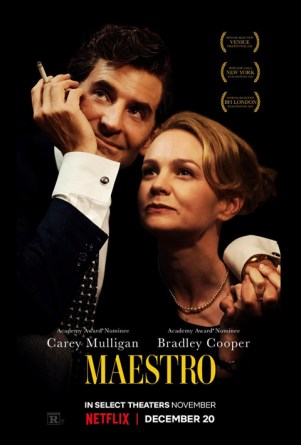
A film of twos. There’s the central character, Leonard Bernstein and his wife, Felicia Montealegre. That means it’s a tussle between Bradley Cooper and Carey Mulligan.
It’s also a film split into two, leaping time as it switches from black and white to colour, and for me… part two couldn’t compete with the superbly assembled first half. The structure, of course, reflects the relationship and Bernstein’s ouevre. But the sleight of hand palpably left a lot of viewers confused that this biopic, with all it’s well practised conducting, wasn’t really about Bernstein at all. Casting Mulligan was Cooper’s masterstroke, but awkwardly this tribute to one of the 20th century’s great talents makes you think of the biopic that could have been.
 Oppenheimer
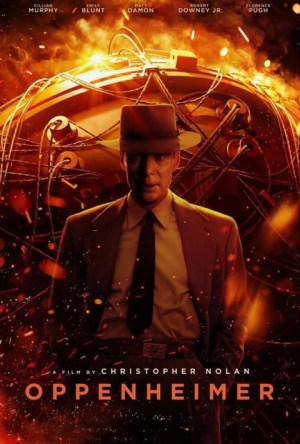
In the painfully long lead-up to Oppenheimer, it felt like the end of cinema was approaching. I duly checked in to see it at the IMAX at London’s Science Museum (it’s what Robert would want) and then caught Barbie a few weeks later. Still, the most successful biopic Hollywood’s ever made didn’t disappoint. There’s valid criticism and crucial discussion that comes from Nolan’s selective adaptation of American Prometheus. The focus is through Cillian Murphy’s scientist, the weight of what the Manhattan Project accomplished and its political legacy form the time-shifting narrative Nolan thrives on. There’s scientific risk in the middle that could have fulfilled the Nolan formula, but the crux of the customer end twist is wry for the director. My shout for Best Picture, as an all-around success and bravura filmmaking. In fairness to Barbie, and because that’s the way the Oscars work, I think Best Director could just slip through Nolan’s fingers. This time.
 Past Lives
A quiet, measured piece, and on of those brilliant New York movies that pop up every so often. Past Lives was the early underdog, sneaking out and drawing audiences in with its novelesque distillation of a huge universal idea into a relationship.
But I’m not sure it doesn’t scuff its lines, by choosing this particular line. It’s the point, but the weight of inyeon struggles to escape one of the film’s small apartments. Unlikely to flash too brightly, as new underdogs like American Fiction land their lines precisely. That said, the lack of back-up noms should be debated as much as Barbie‘s, as that’s similarly sunk its chances.
 Poor Things
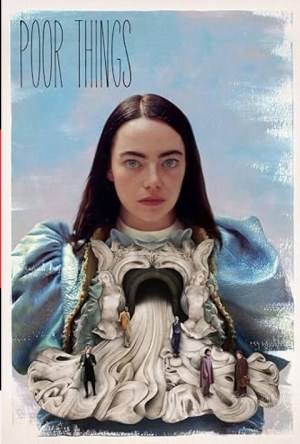
The natural progression of Yorgos Lanthimos is a joy to behold. How lucky he is to have Emma Stone to bounce this material off, especially as she steps up to producer with this film.
As I understand, Poor Things doesn’t rise to the comments on social inequality underpinning the book and underplays the sharp nods and rejections of Frankenstein. In Lanthimos’ hands, there’s all manner of mad scientist films wrapped into this (the heavy dose of Dr. Moreau is clear), but this isn’t about the abdication of responsibility integral to Mary Shelley’s Frankenstein. The themes of identity and gender are pushed home by some extraordinary male performances (Dafoe’s LOLs). But through what’s really a succession of beautifully realised sketches, the one constant is Stone’s incredible performance.
The character development/arc of herBella Baxter may be one of the most extraordinary and brilliant in any Oscar-nominated film. Perfectly manufactured by the concept and the crucial spine of the film. It’s brilliance is a special effect that could almost goes unnoticed – but it’s hard to see her not landing both hands on the Best Actress Oscar.
For me, Poor Things is the film for Oppenheimer to beat. While it’s unlikely to steal the Best Picture prize, I can see Lanthimos deservedly sneaking in to claim best Director, buoyed by snapping up all the production, make-up and costume prizes.
 The Zone of Interest
In a different universe, this could take it all. Glazer’s pared-down adaptation of Martin Amis’ novel is meticulous. Every frame is essential, layering the horrifying juxtaposition of the time. It’s stunningly crafted, and the breaks — night visions, dreamlike breaks from the narrative of the Höss family and their perfect home by the wall of Auschwitz — land huge blows in silent cinemas.
The colour, the soundscape (Mica Levi could nab the Score statue) and… The ending. The sheer blunt, confident, shocking, audacious brilliance of it is jaw-dropping. The Zone of Interest is vital viewing and quite probably a shoe-in for Best International Film.
That’s 2024 done, let the speculation and strategic viewing of 2025 hopefuls begin. See you next year!
Leave a comment